Shaping Knowledge and Community
CIUS 50th Anniversary Exhibit
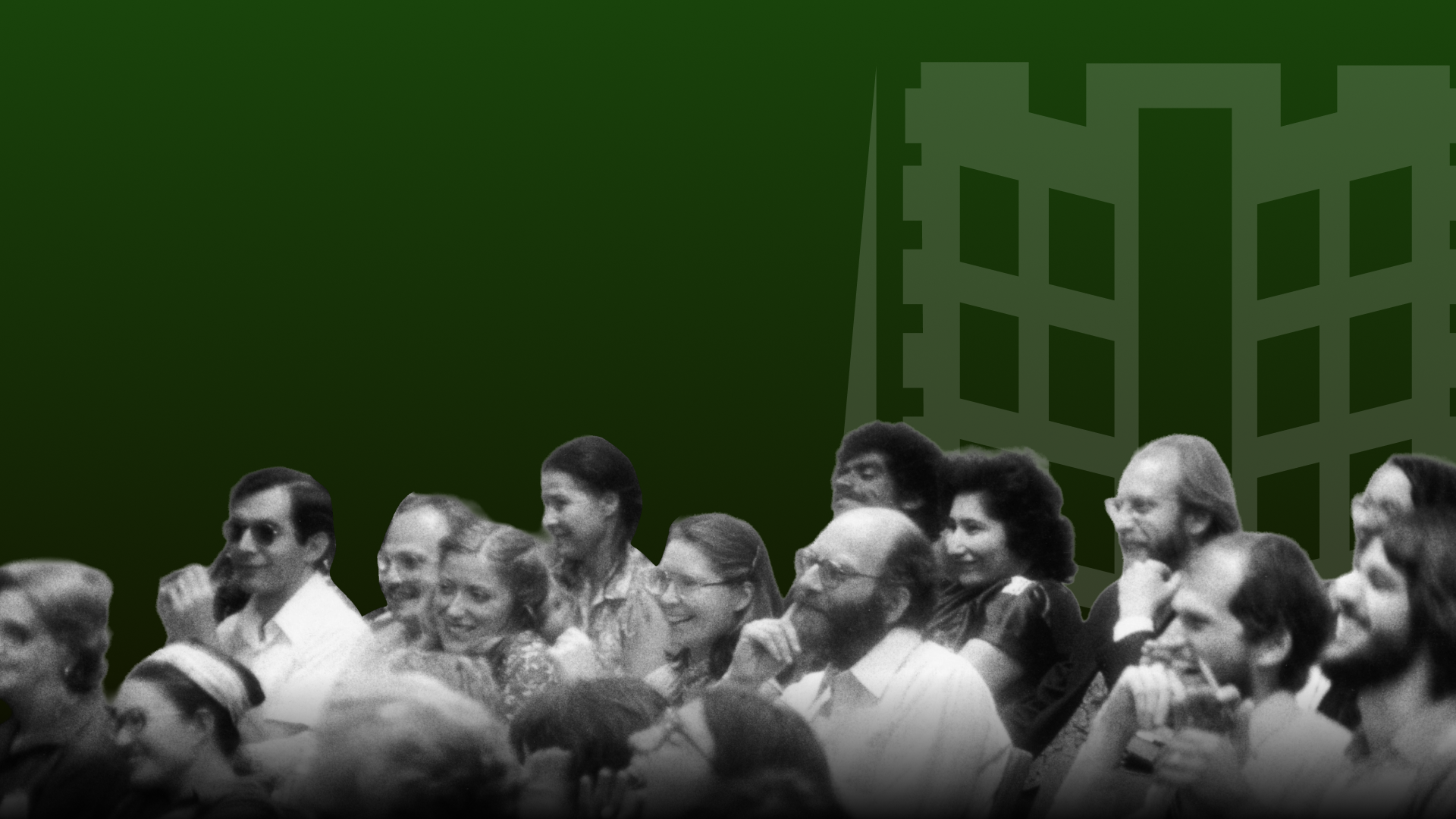
Founded at the University of Alberta on 1 July 1976, the Canadian Institute of Ukrainian Studies grew out of a vision to create a dedicated space in Canada for the study of Ukrainian language, history, and culture. Fifty years later, this exhibit looks back at how that vision took shape and how CIUS developed into an institution with an international reach and impact.
In its first decades, the institute produced the five-volume Encyclopedia of Ukraine, convened international symposia, and published books as well as a scholarly journal. While Ukraine remained under Soviet rule, the institute provided a vital space for research free from Soviet censorship.
Its scholarship has continued to expand. Among its more recent major achievements are the ten-volume English edition of Mykhailo Hrushevsky’s History of Ukraine-Rus', as well as pioneering research in Crimean Tatar studies and Indigenous–Ukrainian relations in Canada.
These achievements represent only part of a much wider record. Drawing on the institute’s archives and publications, as well as reports from its many initiatives and events, the exhibition’s panels and digital display tell the story of how a community–province–university partnership has shaped five decades of scholarship, collaboration, and engagement with Ukraine and Ukrainian communities.
CIUS 50th Anniversary Exhibit Locations During the Symposium
Until 22 October 2026
Rutherford Library South Foyer, University of Alberta
89 Ave NW, Edmonton, AB
23 October – 6 November 2026 (except 29 – 30 October)
University Commons, University of Alberta
11487 89 Ave NW, Edmonton, AB
Open to all visitors.
28 October 2026
University Commons, University of Alberta
11487 89 Ave NW, Edmonton, AB
The exhibit will be on view at University Commons during the opening day of the CIUS 50th Anniversary Symposium.
Open to all visitors.
29–30 October 2026
Edmonton Convention Centre
9797 Jasper Ave, Edmonton, AB
The exhibit will continue at the Edmonton Convention Centre as part of the CIUS 50th Anniversary Symposium.
Access with Symposium registration.
Orwell and the Holodomor
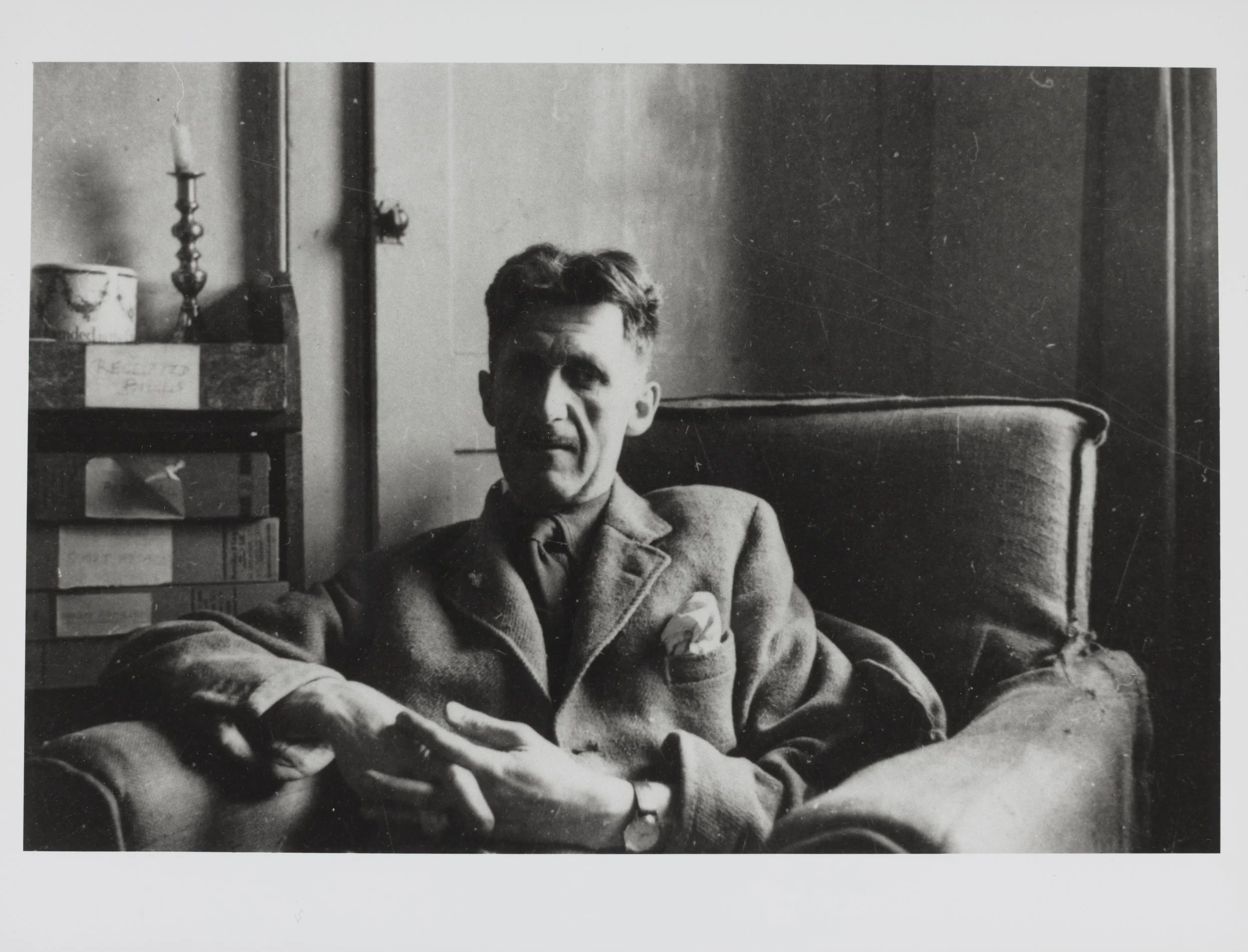
This exhibit explores the shocking, untold historical inspiration for novelist George Orwell’s world-famous works through a fresh examination of the author’s political commentary on the famine of 1932-1933 in Ukraine, or Holodomor.
Across more than half a dozen published and unpublished pieces written during the 1930s and 1940s - such as his unreleased essay “The Freedom of the Press” - Orwell revealed that his fictional stories of totalitarianism, revisionism, and misinformation were rooted in the horrors of the Holodomor and the international awareness, response, and denial of the Stalinist regime’s forced starvation campaign against the Ukrainian people.
George Orwell is often considered “the most influential political writer of the 20th century,” and if anything his work’s relevance is increasing. Yet despite this, little focus has been given to the key part that the Holodomor and its cover-up played in Orwell’s thinking about that present and past, or the dystopian fictional futures he created.
Aside from an excellent Kyiv Post op-ed by Bohdan Nahaylo few seem to have noted the connection, but regardless of the topic’s novelty it deserves a deeper exploration. Why? Because Orwell’s own words over more than a decade demand it, and because the significance of modernity’s “most influential political writer” deriving his dystopian depictions from the Holodomor and its denial is self-evident.
This exhibit has been made possible by generous support from the National Museum of the Holodomor, the Holodomor Research and Education Consortium, Global Affairs Canada, Cowater International, the Canada-Ukraine Foundation, the Kule Institute for Advanced Study, and the Ukrainian Language Education Centre.
Much of the material remains under copyright in some jurisdictions, including the US, and is reproduced with the kind permission of the Orwell Estate.
“Local Culture and Diversity on the Prairies” is a research project that was started in 2003, with the aim to study vernacular culture and cultural diversity on the Prairies. This large collection of over 800 recorded interviews documented everyday life, ethnic identity and regional variation among people of Ukrainian, French, German, English and other heritage who settled on the Canadian prairies up to 1939. The recordings captured the first-hand stories of children of the early settlers, as well as those who came between the wars.
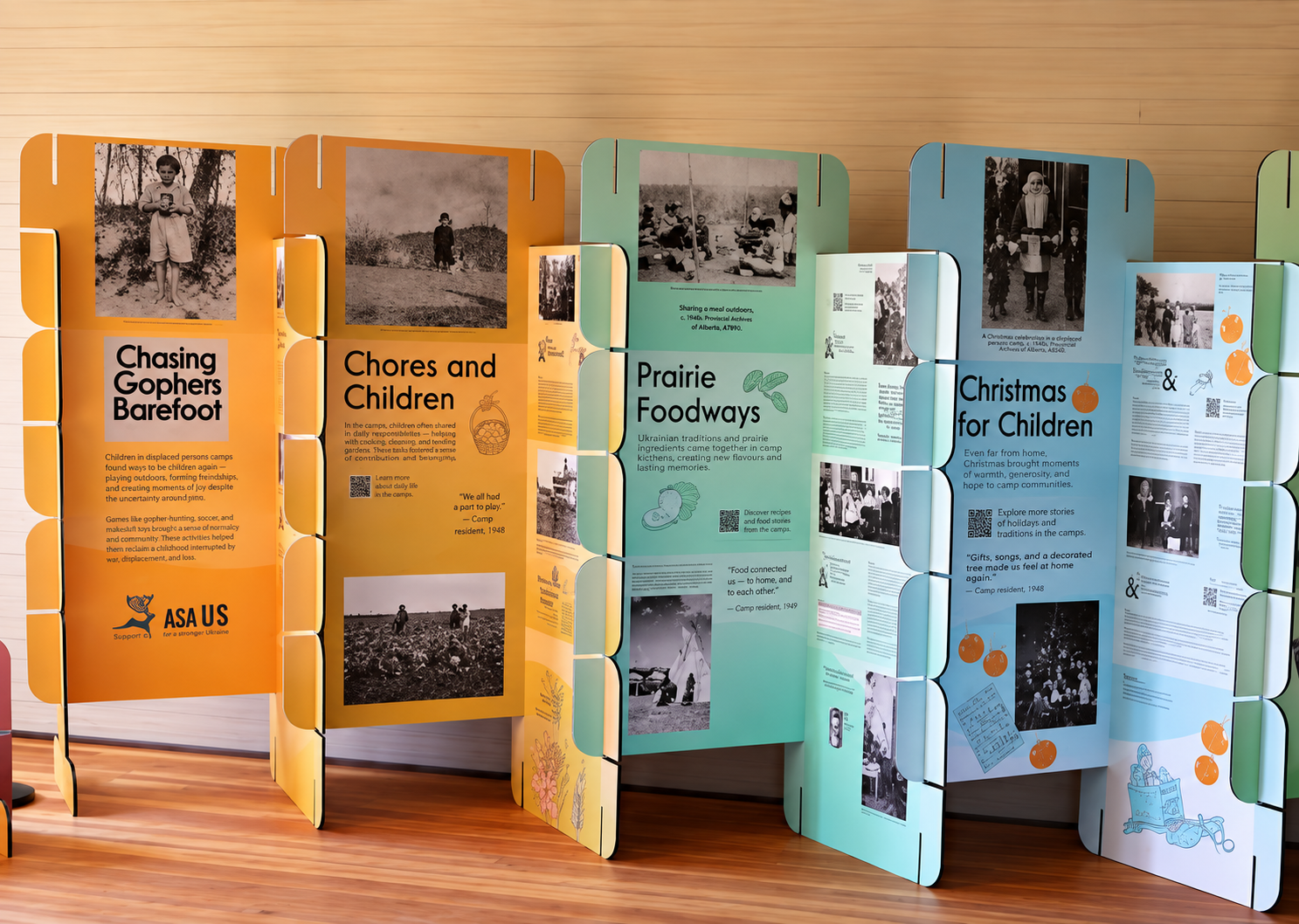
Materials from the Local Culture Project have been used to create the traveling exhibit “Chasing Gophers Barefoot: Prairie Children of the 1930s” for the Kule Folklore Centre. The exhibit uses the recollections of adults to re-create the worlds of childhood. It tells stories about everyday life of children on a farm and on the streets of a small town, at the school, the church, and the community hall. It explores the clothing that formed the most personal aspect of ‘making do’ in the 1930s, scarcity of food and rare and unforgettable treats, but also toys, games, reading, music, and sports.
The exhibit is produced as “puzzle pieces” to reflect a past time of children. This exhibit is of interest to all generations and ethnic groups as children have an opportunity to understand how their great grandparents lived when they were young and older people can reflect on the exhibit and remember similar experiences of their youth.
Chasing Gophers Barefoot: Prairie Children of the 1930s
“Orwell and the Holodomor” & “Chasing Gophers Barefoot” Locations During the Sympsoium
29-30 October 2026
Edmonton Convention Centre
9797 Jasper Ave, Edmonton, AB
Both exhibits will be on view in the corridor outside Salons 8–9 at the Edmonton Convention Centre as part of the CIUS 50th Anniversary Symposium.
Access with Symposium registration.